Being More: Mirabelle Morah’s multi-layered New Wave Man
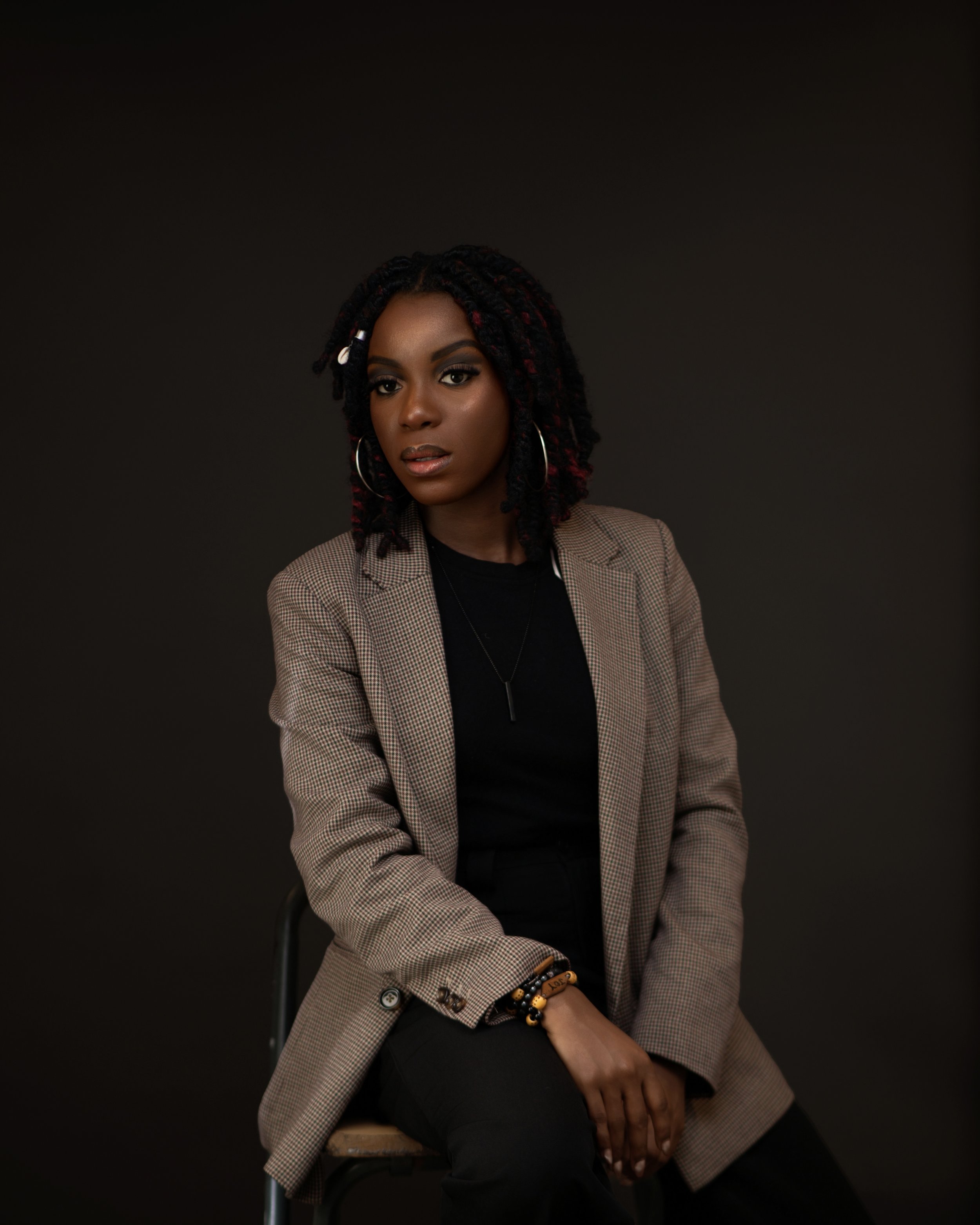
Mirabelle Morah calls herself a creative technologist, and I find this title refreshing. In our fast-paced commercial technology era, this insistence on creativity could be a small act of resistance. However, she is much more than this. Morah is a motion designer working at the intersection of design, communication, and social impact—creating brand and campaign work for purpose-led organisations, where the through-line is always people. Her multidimensional practice is driven by a rigour rooted in a deep appreciation of community and its social force. Her work has brought focus to groups too often left invisible — underserved children, young women and refugees, rural women farmers in Nigeria — and to causes such as knife crime in the UK. She is, in the fullest sense, a storyteller crafting her stories toward a more generous idea of how we might live.
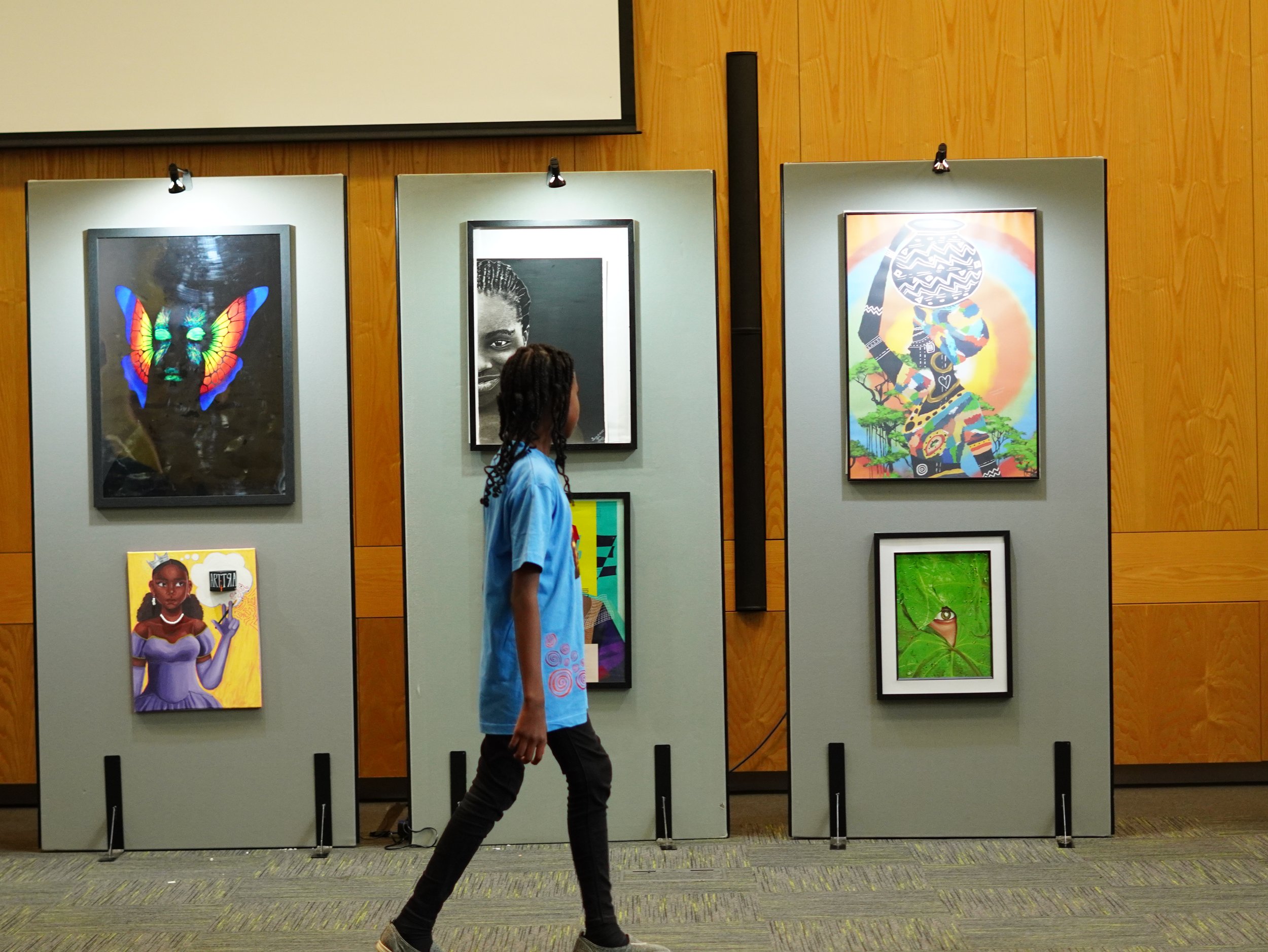
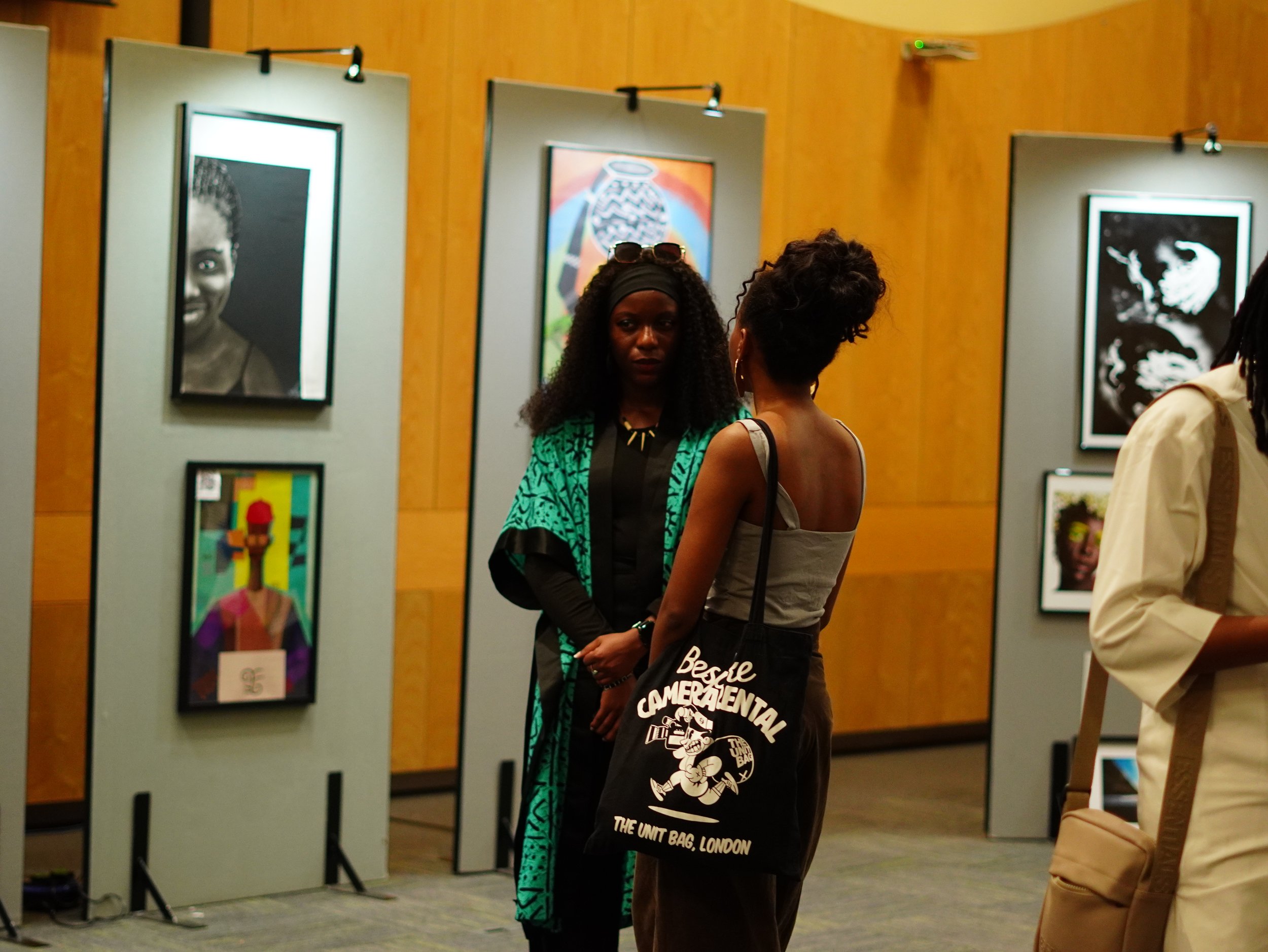
Born in Nigeria and Igbo by tribe, Morah grew up alongside different tribes like Efik and Ibibio. In Scotland, where she is currently based, she also works across many cultures. This lived multiplicity sits at the core of her practice, and it is the explicit subject of the work she presented at the Bradford African Festival of Arts, responding to the exhibition's theme "Nkosoo" — an Akan word for advancement and progress — with her AR piece New Wave Man.
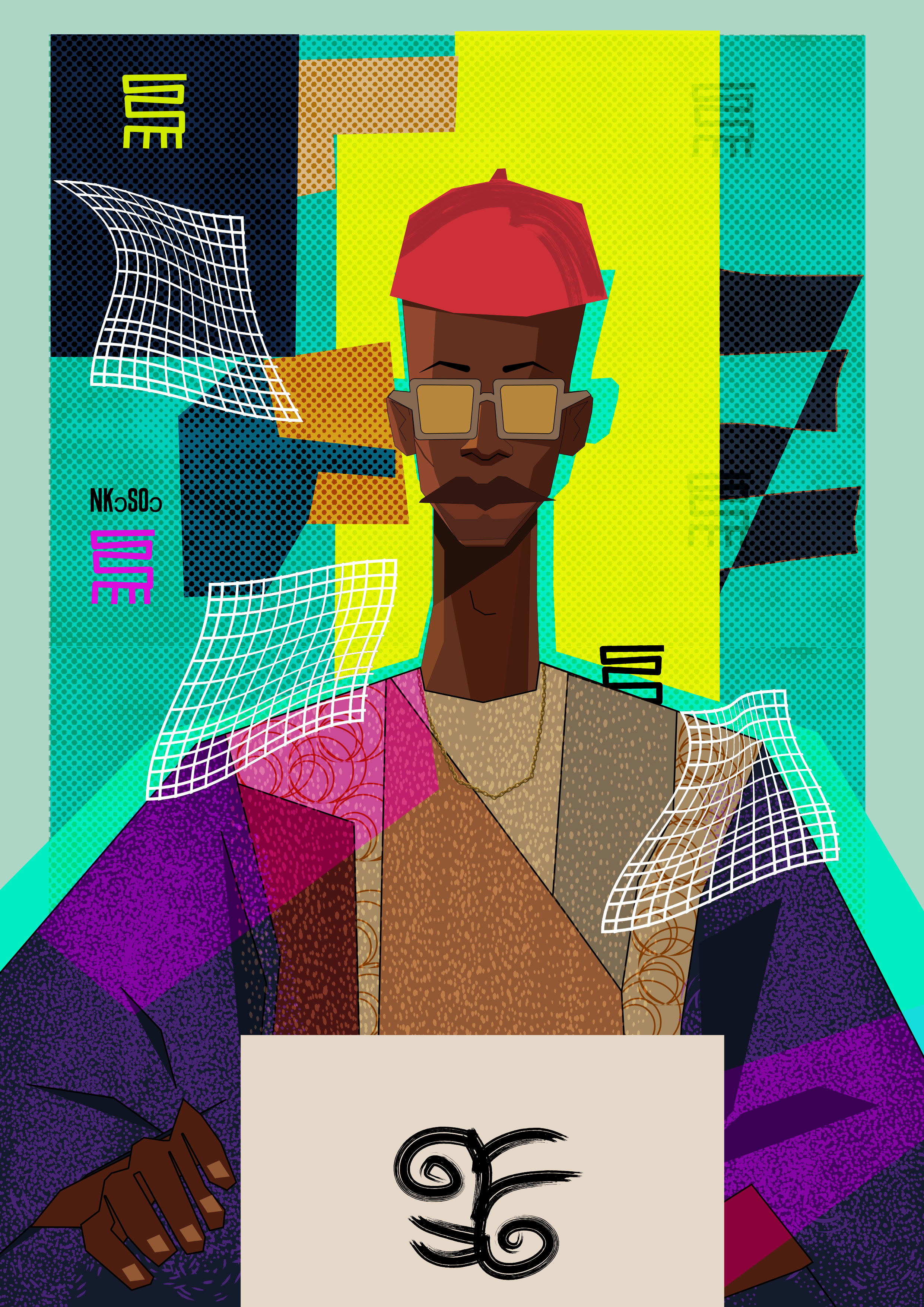
New Wave Man borrows its title from the New Wave design style, all clashing colour and broken rules, and Morah extends that logic from graphics to identity. “To make waves, to connect across cultures, is also to break some rules”, she says.
This vibrant artwork first captures you with its bold lines and colour before inviting you to follow its choreography. Its apparently static figure comes alive through AR technology, and as the man takes off his glasses and returns your gaze, he gradually changes: his red Igbo cap gives way to a black Efik one, while the Yoruba Agbada attire stays constant on his body. The costume is deliberately composite — Nigerian dress beneath a Ghanaian festival's Akan theme, a small pan-African layering that mirrors the show around it.
Whether this is cultural borrowing or cultural belonging is the question the piece stakes itself on. "A person can just first look at you on the surface, but we're more than that […] you could still connect with your own culture and also wear another person's clothing in a very appropriate way," Morah answers.
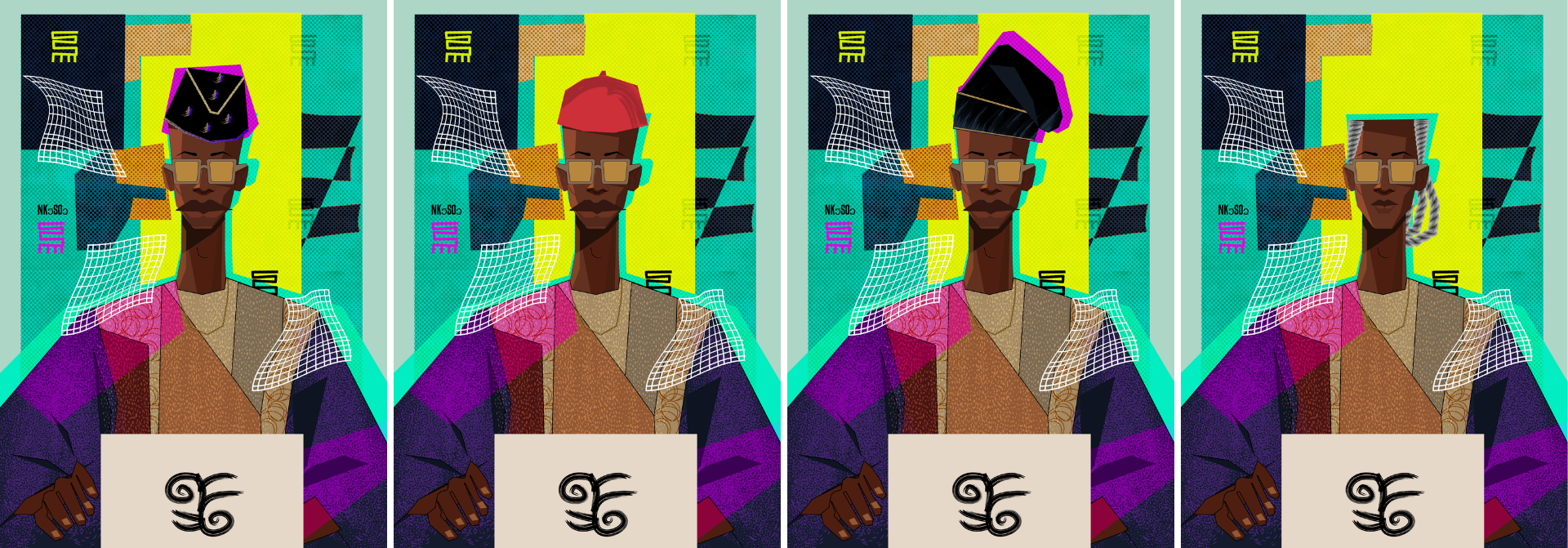
The claim is generous and persuasive. Yet, the work states its harmony more than it demonstrates it: the AR shows one garment dissolving smoothly into another, but a smooth transition is not a resolved question. A more sceptical viewer might ask whether the piece has earned its sense of togetherness or simply staged it. Morah wisely leaves the tension productive rather than tidy, and I consider it part of the work's honesty.
For all the delight and amazement it draws, the real intelligence lies in how the AR is used, not as an end in itself, but as a means to communicate the artist’s story, celebrating movement as both a design tool and a cultural one.
And a small hint to her art and philosophy: the Adinkra symbol on the man’s laptop means bravery. A reminder that connecting to other cultures, as well as to our bright new digital world, takes some nerve.